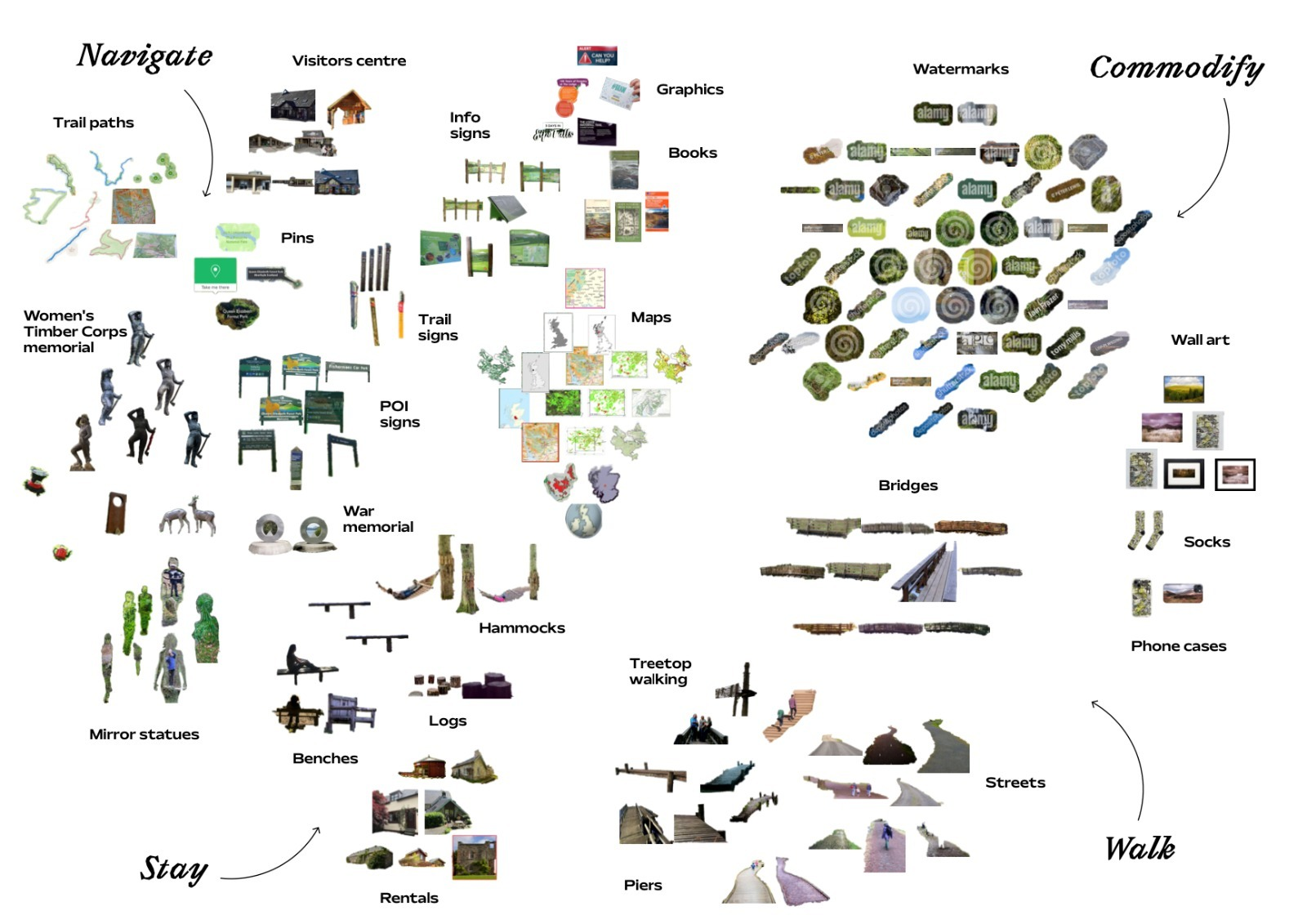
A collaboration with the European Forest Institute exploring how arts- and humanities-based digital methods can be used to understand forest issues and to explore engagement around reforestation. Undertaken as part of the SUPERB project on upscaling forest restoration.
This is an ongoing research project and materials will be listed here when they are available.
- “Restoring forests and facts: how Social Media analysis can shape environmental stories, Oct 2025
- Climate Reporting: 5 Tips for Sourcing Stories Online, Oct 2025
- Keeping ‘nature’ on the public agenda in a noisy world, Oct 2025
- Stakeholder Engagement for the development and implementation of National Restoration Plans (Policy and Practice Brief), Oct 2025.
- New toolkit released to boost forest restoration through storytelling (also cross-posted at EFI blog), Dec 2024
- Networked nature-cultures spotlight as part of critical forest studies collaboratory digital planting, Nov 2024
- Engaging stakeholders in forest ecosystem restoration at the European Commission Green Deal Success Stories, Out 2024
- Colombo, G., & Gray, J. W. Y. (2023). Un-indexing forest media: Repurposing search query results to reconsider forest-society relations. Cultural Geographies.
- Stories as enablers for ‘deepscaling’ forest restoration (also cross-posted at EFI blog), May 2023
- What can Google Image search results tell us about human-forest relationships?, May 2023
- Exploration of forest restoration stories on YouTube, Apr 2023
- What Twitter images tell us about COP27 issues: A focus on the Forests and Climate Leaders’ Partnership and Biodiversity Day (also cross-posted at EFI blog and resilience blog), Jan 2023
- COP27 on Twitter: Forest restoration issues and narratives through hashtags (also cross-posted at EFI blog and Public Data Lab blog), Nov 2022

A collaboration with the European Forest Institute to explore forest governance and the changing role of forests in society according to web and social media data.
The project explores how the 2019 Amazon forest fires were addressed and accounted for through a series of analyses using online data from digital platforms including Twitter, Facebook, Google, Instagram, and Youtube. For further details see:
- Out of the Flames – project website and report with the European Forest Institute
- Colombo, G., Bounegru, L., & Gray, J. (2023). Visual Models for Social Media Image Analysis: Groupings, Engagement, Trends, and Rankings. International Journal Of Communication, 17, 28. Retrieved from https://ijoc.org/index.php/ijoc/article/view/18971
- Gray, J. W. Y., Bounegru, L., & Colombo, G. (2024). #AmazonFires and the online composition of forest politics. In J. Turnbull, A. Searle, H. Anderson-Elliot, & E. H. Giraud (Eds.), Digital Ecologies: Mediating More-Than-Human Worlds. Manchester, UK: Manchester University Press.
How can we sense and make sense of forests with devices, techniques and our bodies? How might we cultivate an interdisciplinary “arts of noticing” (Tsing) for attending to forests and their role in critical zones?
Engaging with themes in the Critical Zones exhibition and catalogue curated by Bruno Latour and Peter Weibel, this project explores different ways of listening to forests, drawing on different traditions, techniques, methods, media and approaches – from “Shinrin Yoku” (forest bathing) to sensing devices, data sonification to sound walks and storytelling.
The project includes a public workshop with ZKM as part of the Critical Zones exhibition to explore and compare different approaches and the possibilities and limits of forest experiences under current sensing conditions between immediacy and mediation.
For more on the use of digital data and devices to cultivate sensibilities towards trees and forests, see the Critical Zones field book and catalogue, including this chapter on “The Datafication of Forests”.
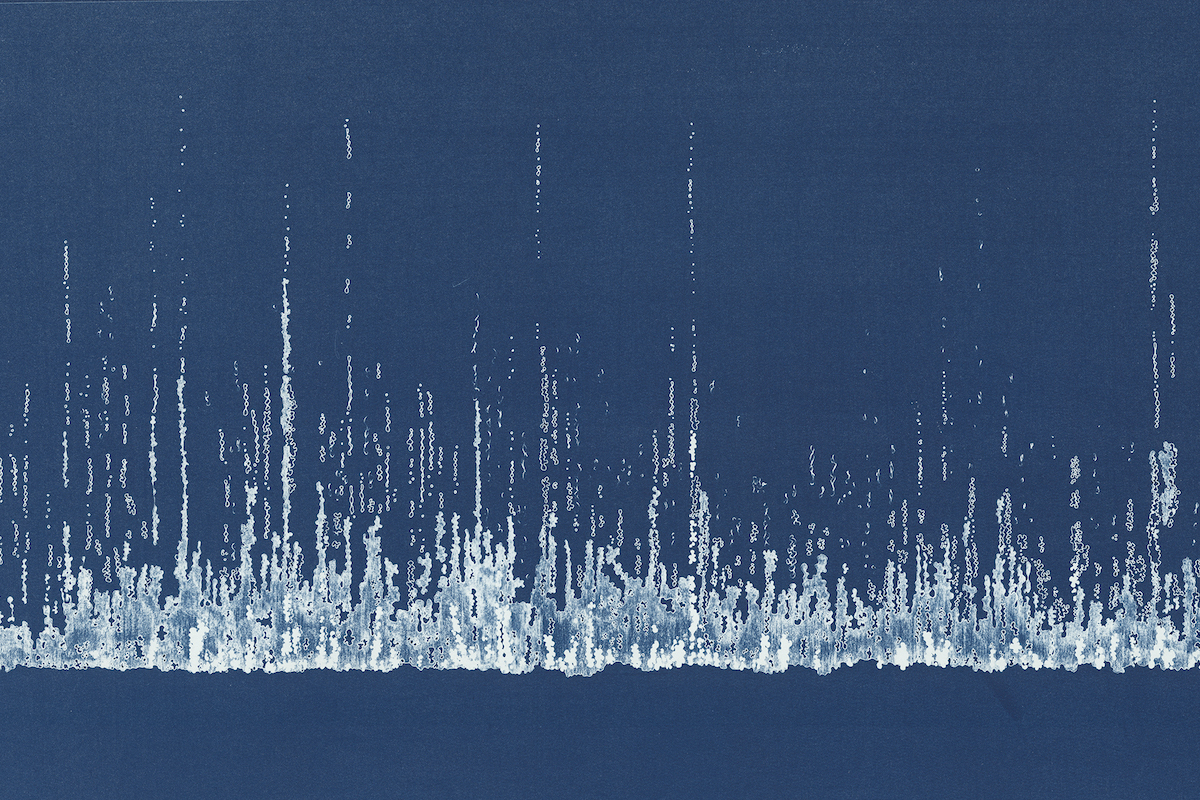
Image: Sound Sketch – Forest Rain – Liz K. Miller